A Brutal Civil War You’ve Probably Never Heard Of
The rise of the Lord’s Resistance Army
(1990s - mid-2000s)
Gulu is the heart of Acholiland in northern Uganda, about 300 kilometers north of Kampala. Through the 1990s and into the 2000s, it became the epicenter of one of sub-Saharan Africa's most prolonged and brutal civil conflicts.
The Lord's Resistance Army (a militant rebel group formed in 1987 by Joseph Kony) grew increasingly violent across Gulu and the surrounding communities through the 1990s. In 1996, the Ugandan government ordered all civilians in northern Uganda to relocate to Internally Displaced Persons (IDP) camps. At one time, an estimated two million people lived in those camps.
Because the LRA specifically targeted children and young adults to forcibly recruit, the impact on this demographic was shattering. Throughout northern Uganda, an estimated 30,000 child "night commuters" fled their homes every night to reach urban areas and the centers of IDP camps because abduction was most likely to occur during evening hours. Most of these children commuted without adult family members.
This was childhood in Gulu for nearly two decades: a nightly commute to safety, and a morning commute back to village homes. Children slept on verandas, in churches, under rooflines, anywhere the town's density offered protection by proximity. Martin (pictured below) has shared stories with us about leaving his home each night to sleep in the bush with his family so they wouldn’t be killed or taken.
It was in this environment that Martin donated a portion of his land so the community could erect an open-air metal structure that would serve as a place for children to sleep in relative safety while parents stood watch. “Community” refused to die even in the darkest years.
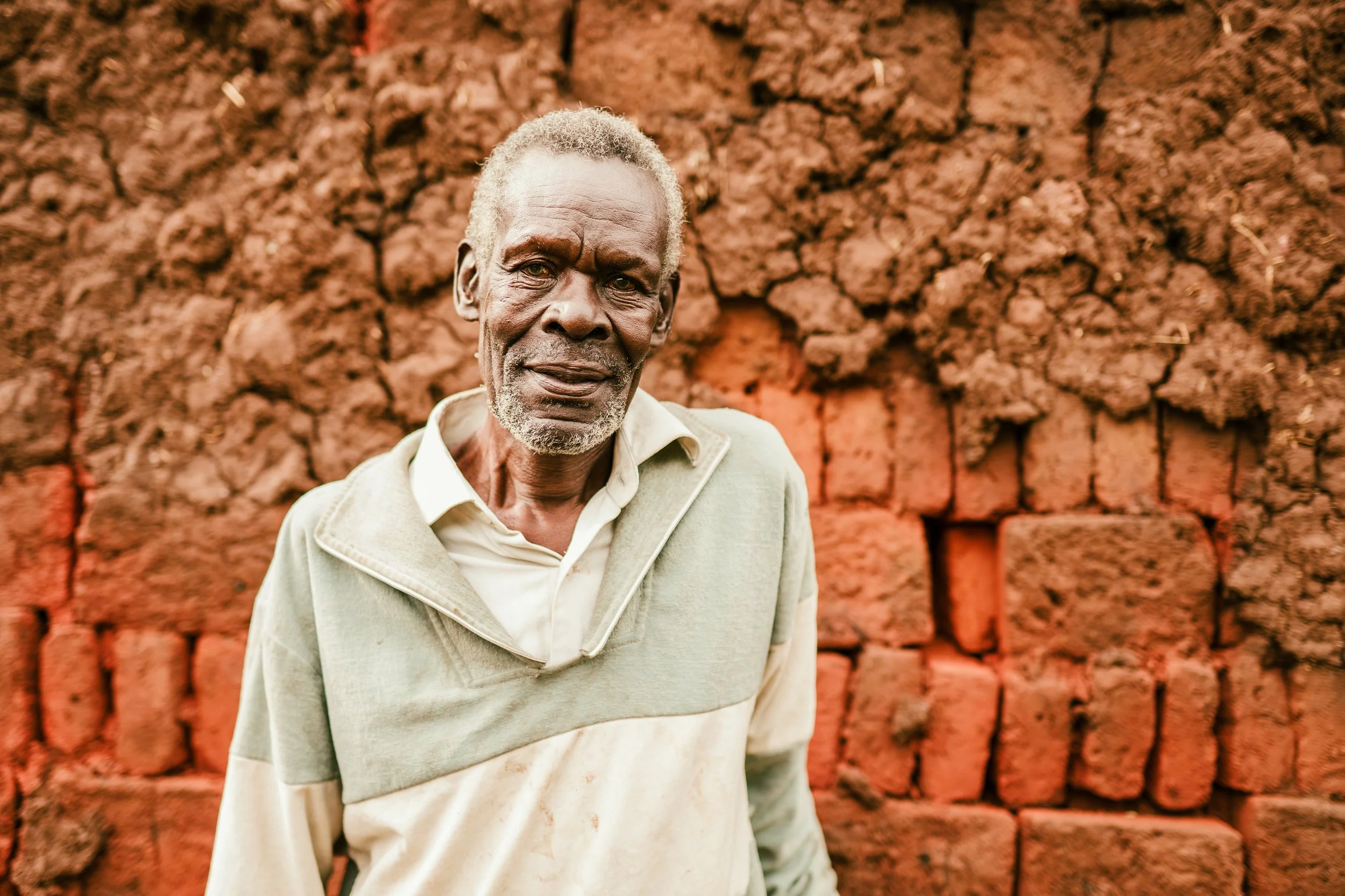
Martin, land donor and supporter of PJS school and community.
A school born from newfound peace
By the late 2000s, the LRA's presence in Uganda had largely collapsed. For over 23 years, the conflict had forced over 1.6 million Ugandans from their ancestral land, with a profound effect on culture, education, health, and livelihood throughout the region.
As peace took hold, the Parents' Junior School community made a powerful choice: they transformed that metal night shelter into an outdoor classroom. A school board came together, and teachers began lessons - the structure stood as both a symbol and a foundation. That's when our partnership began.
As a true symbol of strength, the community of Lapainat (a rural neighborhood outside of Gulu city center) began making bricks and investing in the materials to construct a solid brick schoolhouse. Through our partnership, we were able to expand the building, install composting toilets, and drill a well.
Since then, the partnership has evolved further: with Mwebaza as a committed funder, raising seed money to start and develop social enterprises (small businesses whose profits go towards school operating costs).
We LOVE our time in Gulu.
Once defined by the LRA conflict, Gulu is now undergoing rapid urbanization, attracting investors, businesses, and developers. The city's property boom accelerated after Gulu officially attained city status in 2020. Investments such as the Gulu Logistics Hub, Tororo-Gulu railway rehabilitation, improved border infrastructure, and road upgrades have strengthened Gulu's investment profile. Its location (close to South Sudan and eastern DRC) positions it as a natural trading hub for the wider region.
When we visit, we often eat dinner at Opiyo and Elisabeth’s home (pictured below). We collaborate with school leadership, check up on businesses, and have afternoon tea with Devaki’s college program host mom, Paula, who was our original connection to this lovely place. After the school day is finished, we’ll hit the market, shop for fun slides and sarongs, and then eat some of the best Indian food at a little hotel restaurant called The Northern Pearl.
That said, the Acholi sub-region still carries deep social, economic, and psychological scars of the civil war, and despite progress, this community faces persistent youth unemployment and generational trauma. The work isn't finished — which is exactly why community-rooted investments like an apiary and grain mill, owned and operated locally, matter so much. It’s not charity but economic footing.
The story of Parents' Junior School is the story of Gulu itself: people who refused to let hardship be the final word.